Time to Say Goodbye (Con te partirò): Meaning, History & How to Perform It
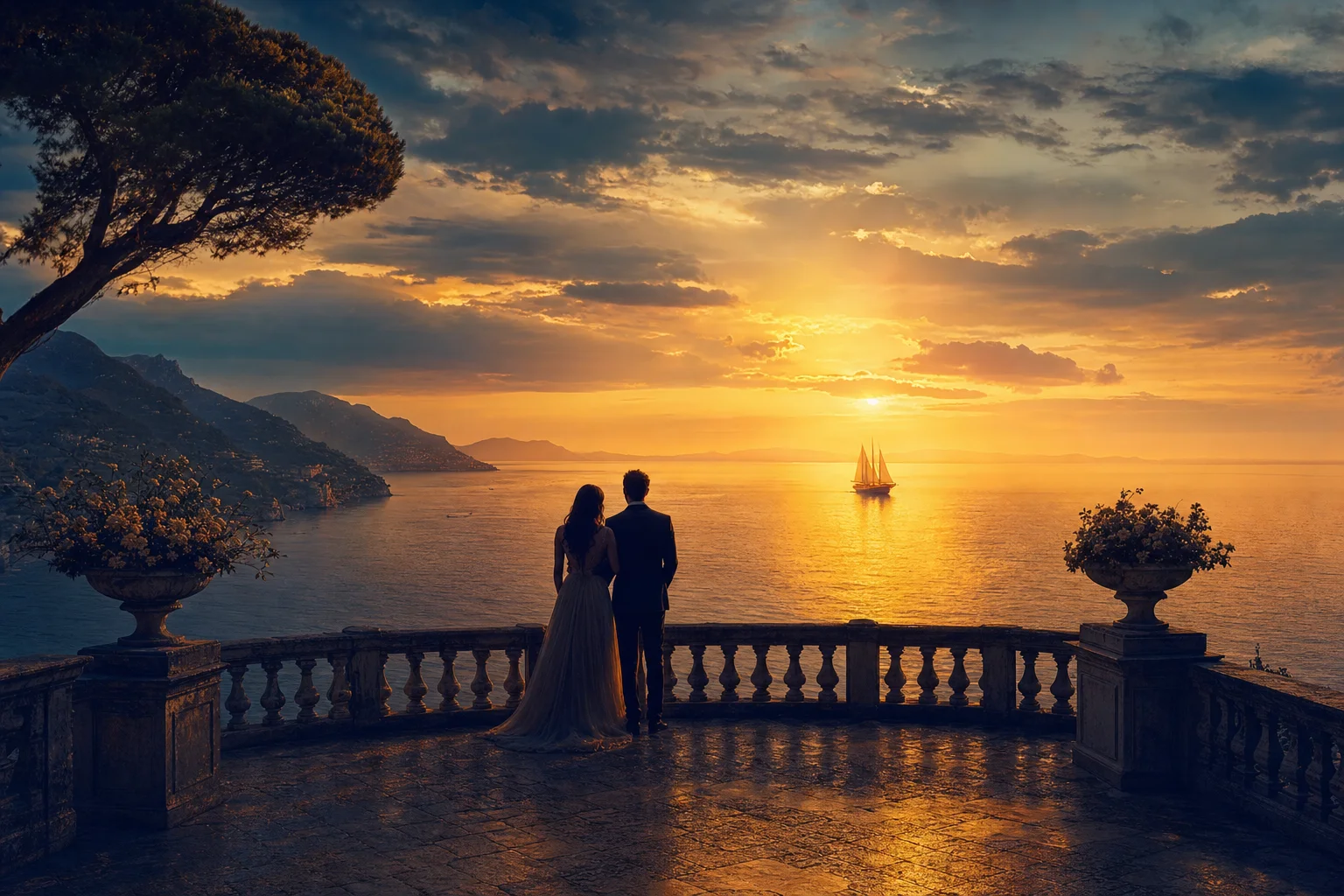
Time to Say Goodbye — originally Con te partirò — is the classical-crossover phenomenon made famous by Andrea Bocelli and Sarah Brightman in 1996. Contrary to its English title, it is not a farewell: the Italian means "With you I will leave," a promise to travel the world together. It became one of the best-selling singles ever and a fixture of galas and weddings worldwide.
At a glance
- Original: Con te partirò — Andrea Bocelli, 1995
- Duet version: Bocelli & Sarah Brightman, 1996 — a global No. 1
- Writers: Francesco Sartori (music), Lucio Quarantotto (lyrics)
- Meaning: "With you I will leave" — departure and adventure, not goodbye
- To perform it: a full orchestra & vocals edition or a piano/vocal/guitar edition
What does "Time to Say Goodbye" really mean?
This is the song's great misunderstanding. The English title suggests a farewell, but the Italian original — Con te partirò — means "With you I will leave." It is a love song about setting sail together, about seeing "countries I never saw and shared with you" — an invitation to adventure, not a parting. The English phrase "Time to Say Goodbye" was added when Sarah Brightman joined Bocelli for the duet, and it stuck; but the emotional truth of the piece is hope and horizon, which is exactly why it works so well at celebrations rather than farewells.
Who wrote Time to Say Goodbye, and when?
The music was composed by Francesco Sartori with Italian lyrics by Lucio Quarantotto. Andrea Bocelli first performed it as Con te partirò at the 1995 Sanremo Festival. The turning point came in 1996, when Bocelli and the soprano Sarah Brightman recorded the bilingual duet Time to Say Goodbye for the farewell fight of the German boxer Henry Maske. The single sold in the millions and made the song a permanent part of the crossover repertoire.
Why it works so well for orchestra
Few crossover pieces are as satisfying to play at full scale. The arrangement moves from an intimate opening, carried by a single voice, to a broad, soaring tutti as soprano and tenor join over the full orchestra — the moment audiences wait for. Set in the original key of G major, it keeps the vocal writing exactly where trained crossover voices expect it. The full orchestra edition delivers the complete cinematic sweep of the Bocelli and Brightman recording.
Which edition do you need?
Choose the full orchestra & vocals edition for a gala, an opera-in-concert or a season finale, with a soprano and tenor out front. Choose the piano/vocal/guitar edition for a singer with piano, a wedding, or any occasion without an orchestra. Both ship as instant, print-ready PDFs.
Programming Time to Say Goodbye
It is a natural closer or emotional high point — the arrangement's build from stillness to full-orchestra climax is designed to lift a hall to its feet. It anchors a crossover or "great voices" programme, works beautifully at weddings and anniversaries, and reliably earns a standing ovation. Give the soloists room in the opening, and save the full weight of the orchestra for the final chorus.
Frequently asked questions
What does "Time to Say Goodbye" actually mean?
The Italian title, Con te partirò, means "With you I will leave" — a promise to set sail and see the world together, not a farewell to a person. The English phrase "Time to Say Goodbye" was added for the Bocelli and Brightman duet; the song is really about departure and adventure shared with someone you love.
Who wrote Time to Say Goodbye and when?
The music was written by Francesco Sartori and the Italian lyrics by Lucio Quarantotto. Andrea Bocelli first recorded it as Con te partirò in 1995; the 1996 duet with Sarah Brightman, Time to Say Goodbye, became one of the best-selling singles of all time.
Is Time to Say Goodbye a sad or funeral song?
Despite the English title, no — it is a hopeful, romantic song about leaving to travel the world with the person you love. Its uplifting build and soaring climax make it a favourite for galas, weddings and celebratory occasions.
Is there orchestra sheet music for Time to Say Goodbye?
Yes. Paul Lorenz Music publishes a full orchestra edition with dedicated soprano and tenor parts in G major, and a separate piano/vocal/guitar edition, both as instant PDFs.